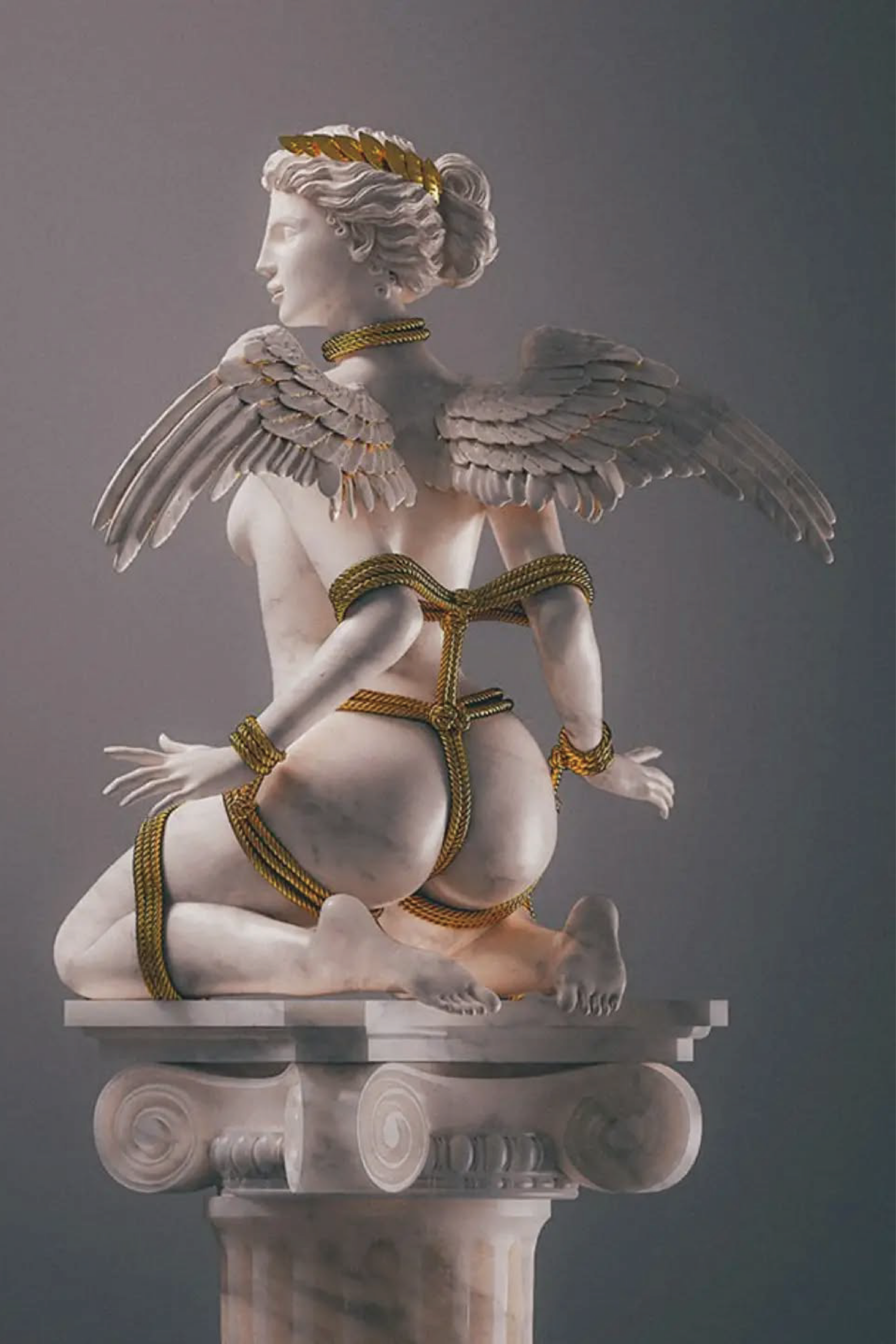
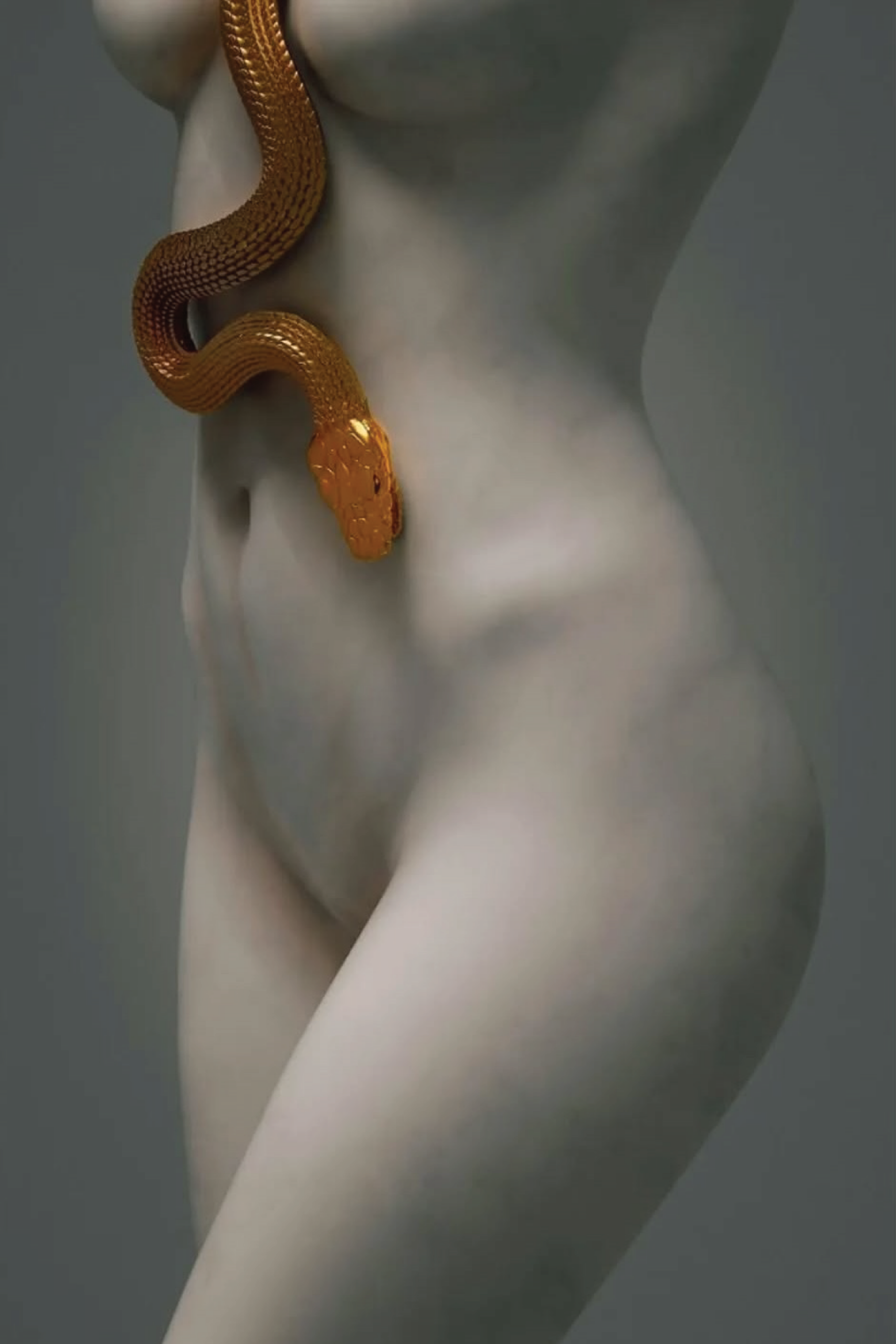
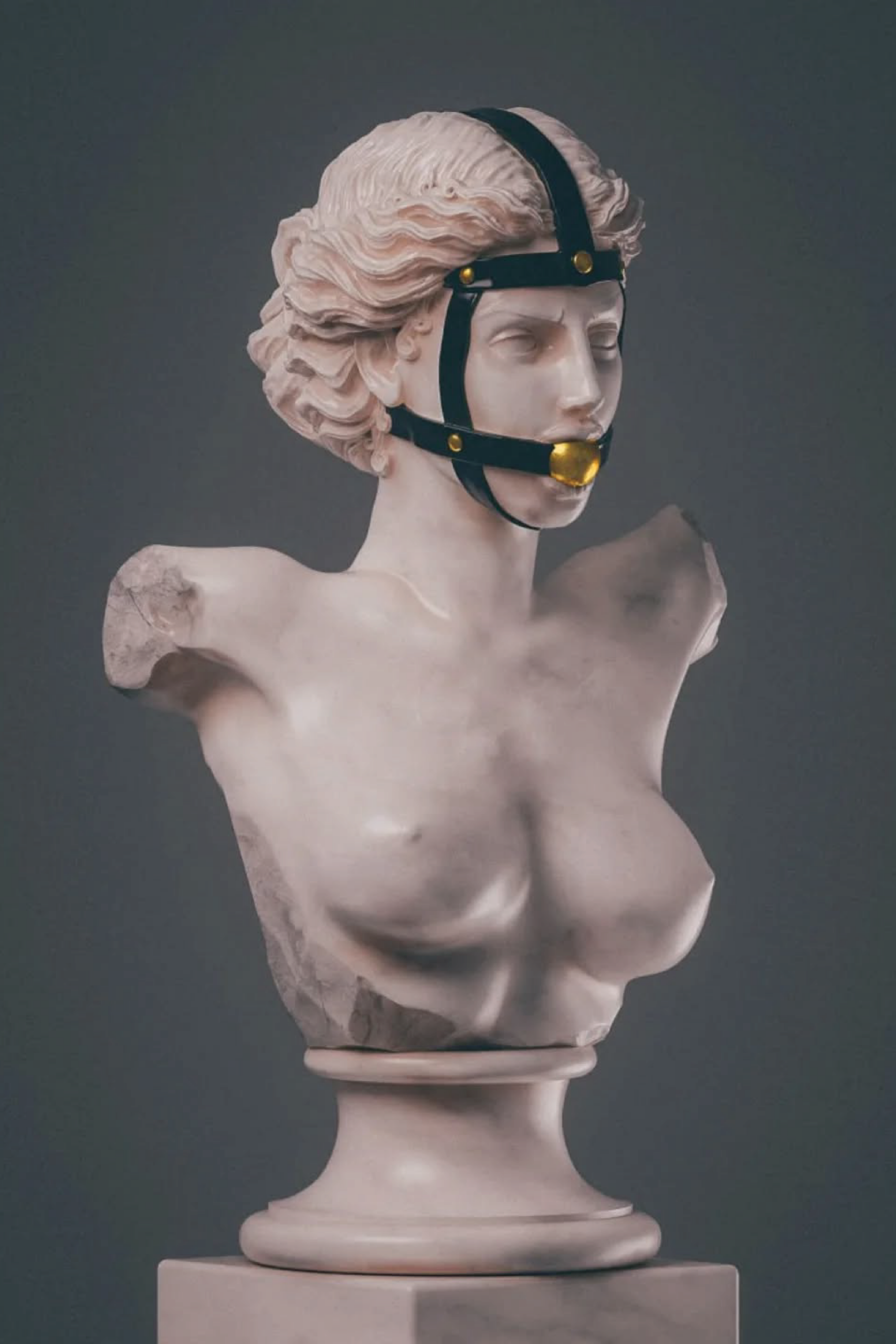
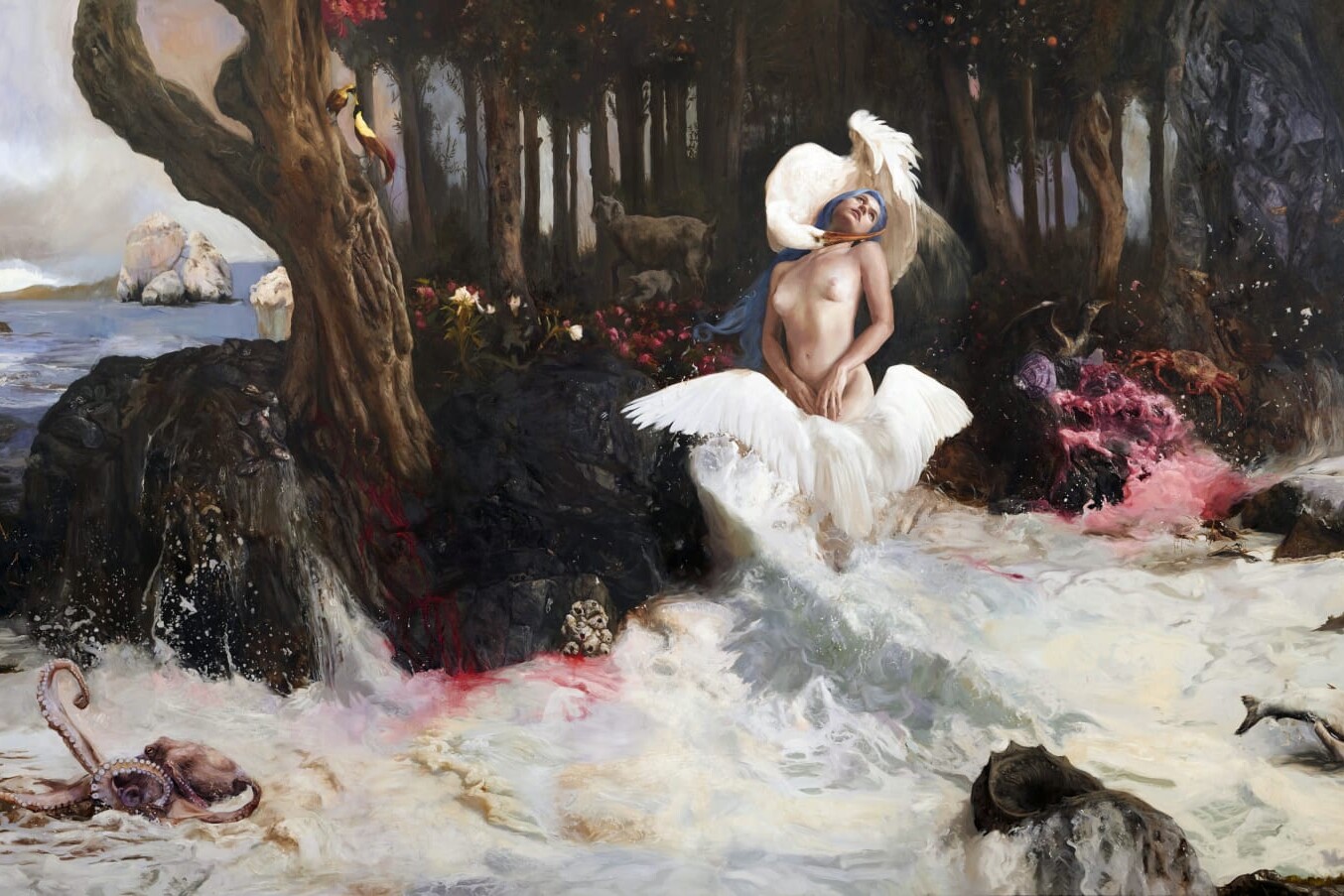
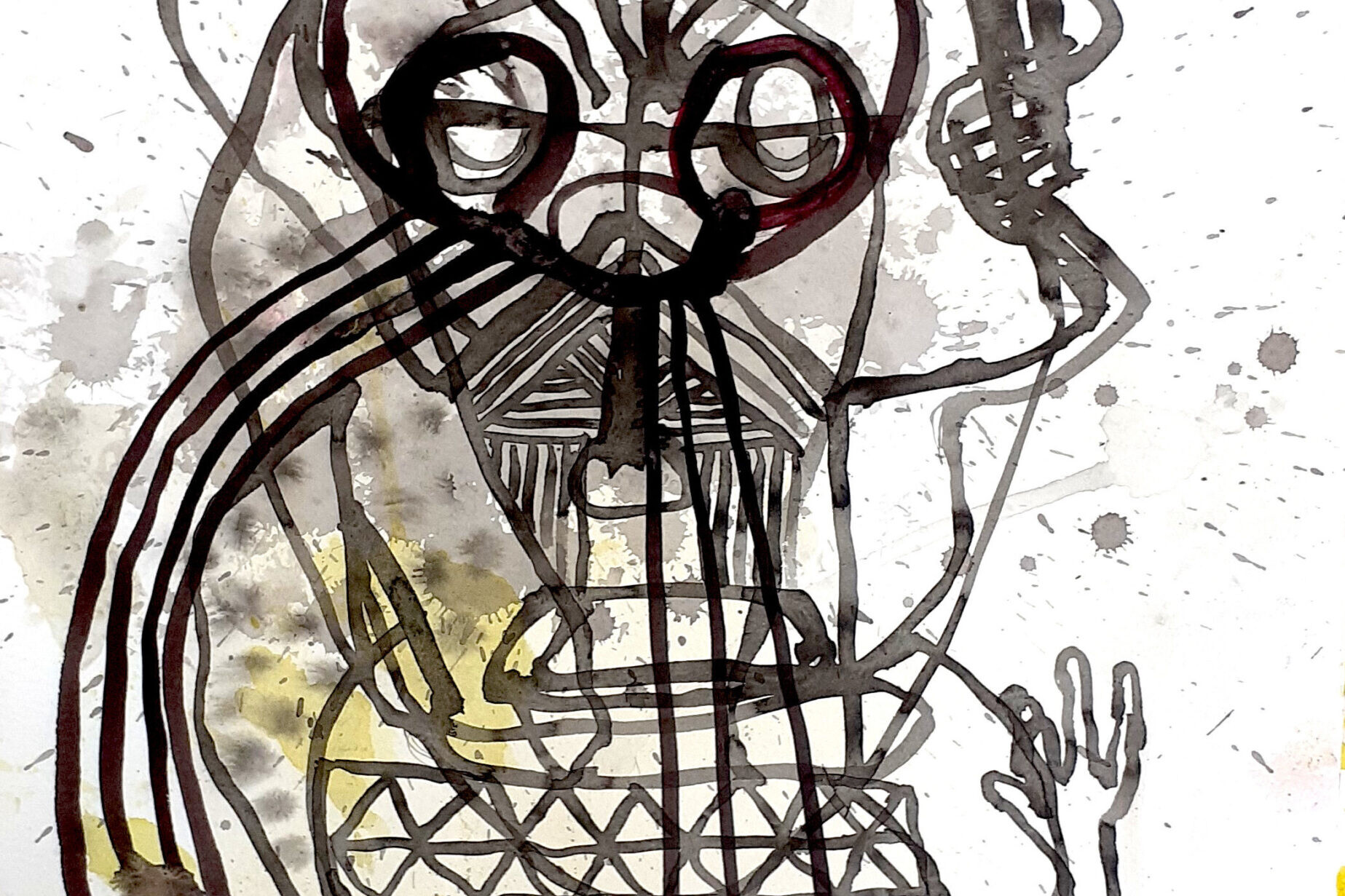
Hailing from Macedonia, Oliver Marinkoski reimagines Roman and Greek goddesses through a contemporary lens, blending classical elegance with modern sensuality.
His work plays at the edge of eroticism, balancing provocation with polish, and weaving mythology, symbolism, and refined aesthetics into images that feel at once ancient and entirely now.
We’re delighted to welcome him to Decadent. It seems like the perfect place for his startling, uncompromising work.
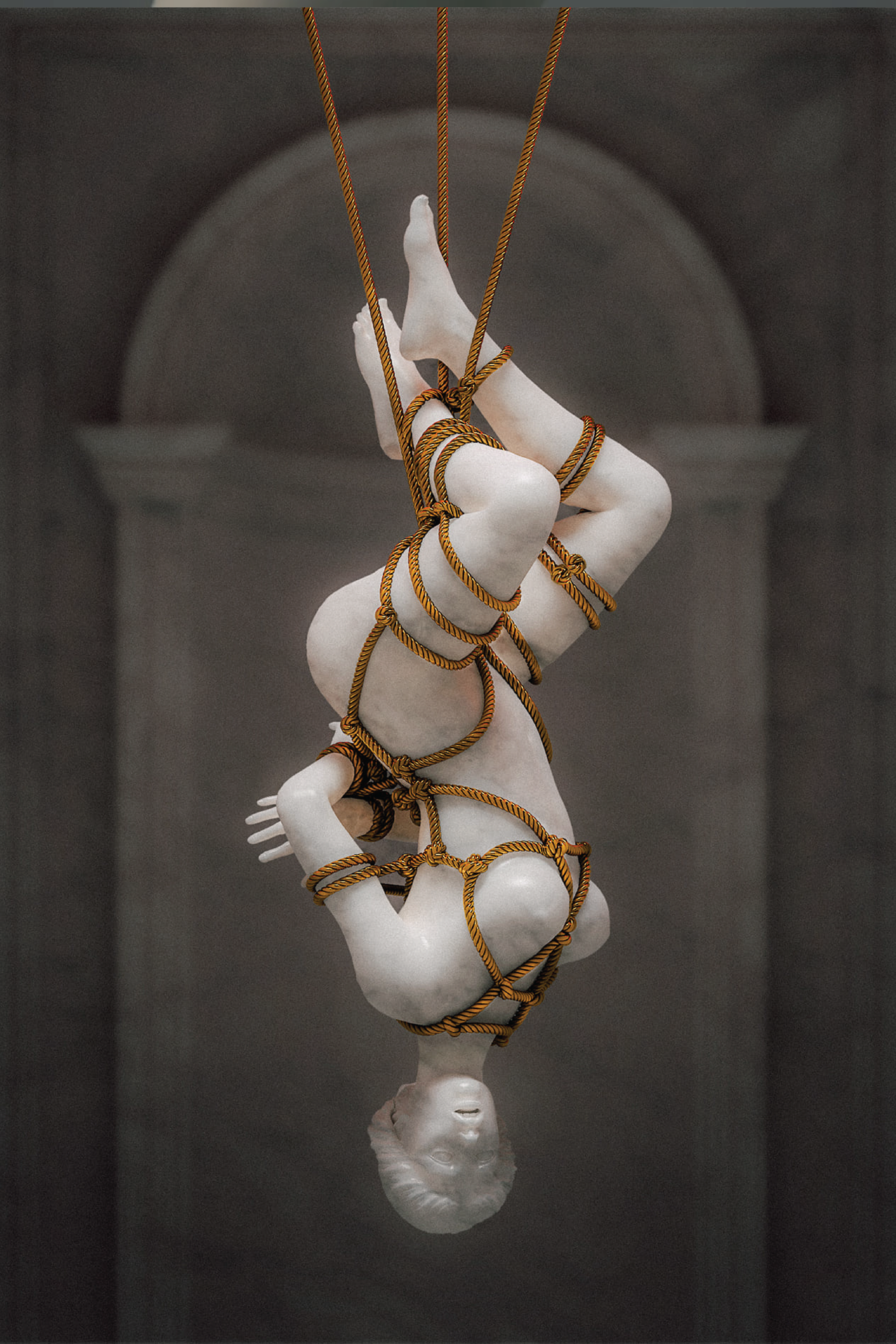
Hi Oliver and welcome to Decadent. Your work fuses two very different worlds in a way that’s both entertaining and unsettling. What interests you about that tension?
I don’t really think that tension exists anymore. When I began working in this direction four or five years ago, only a few artists were exploring this territory. Today it’s much more mainstream, and in some ways even predictable—especially with the rise of AI. What once felt risky has become part of the visual background.
When did you realize there was something compelling about fusing S&M with classical symbolism?
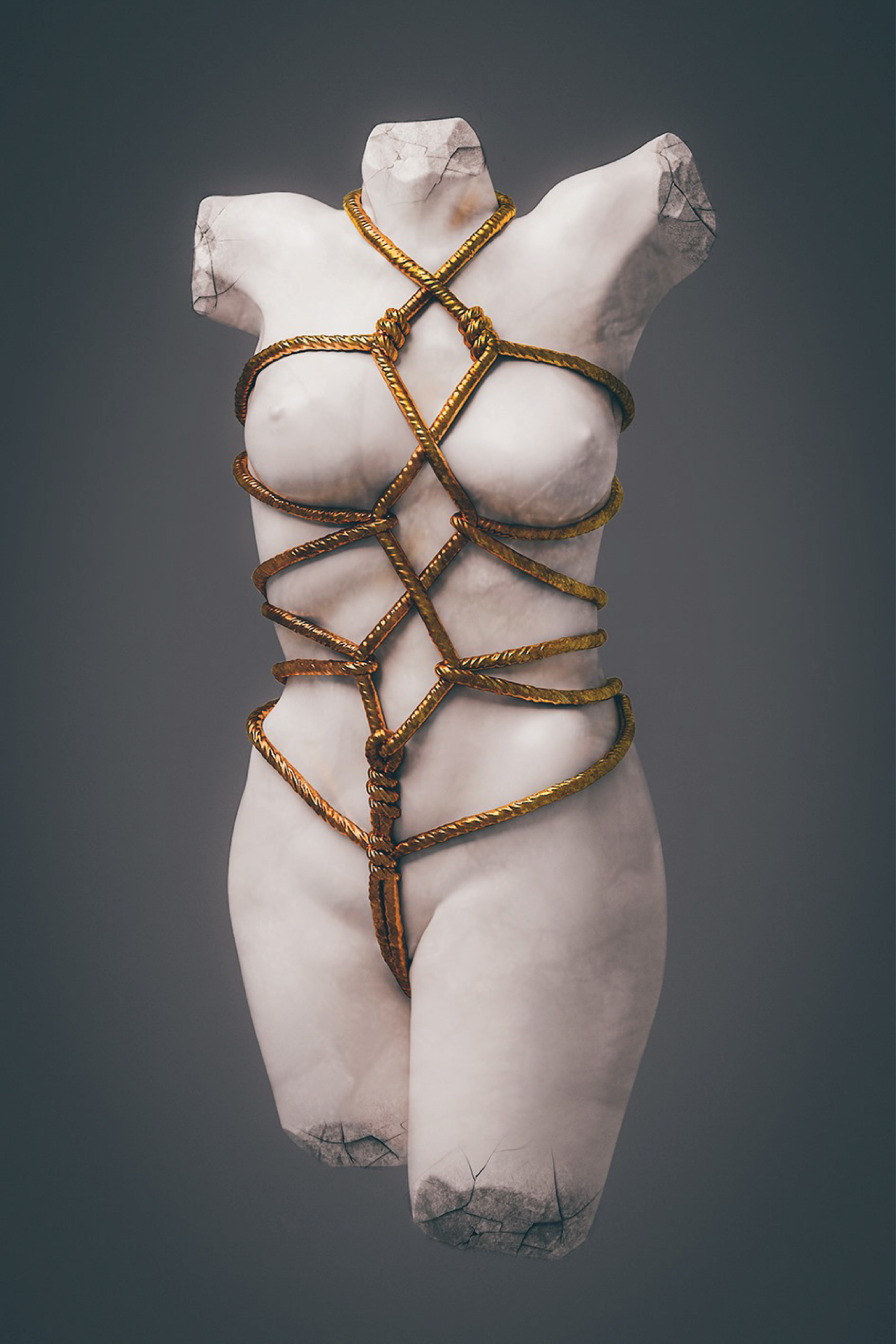
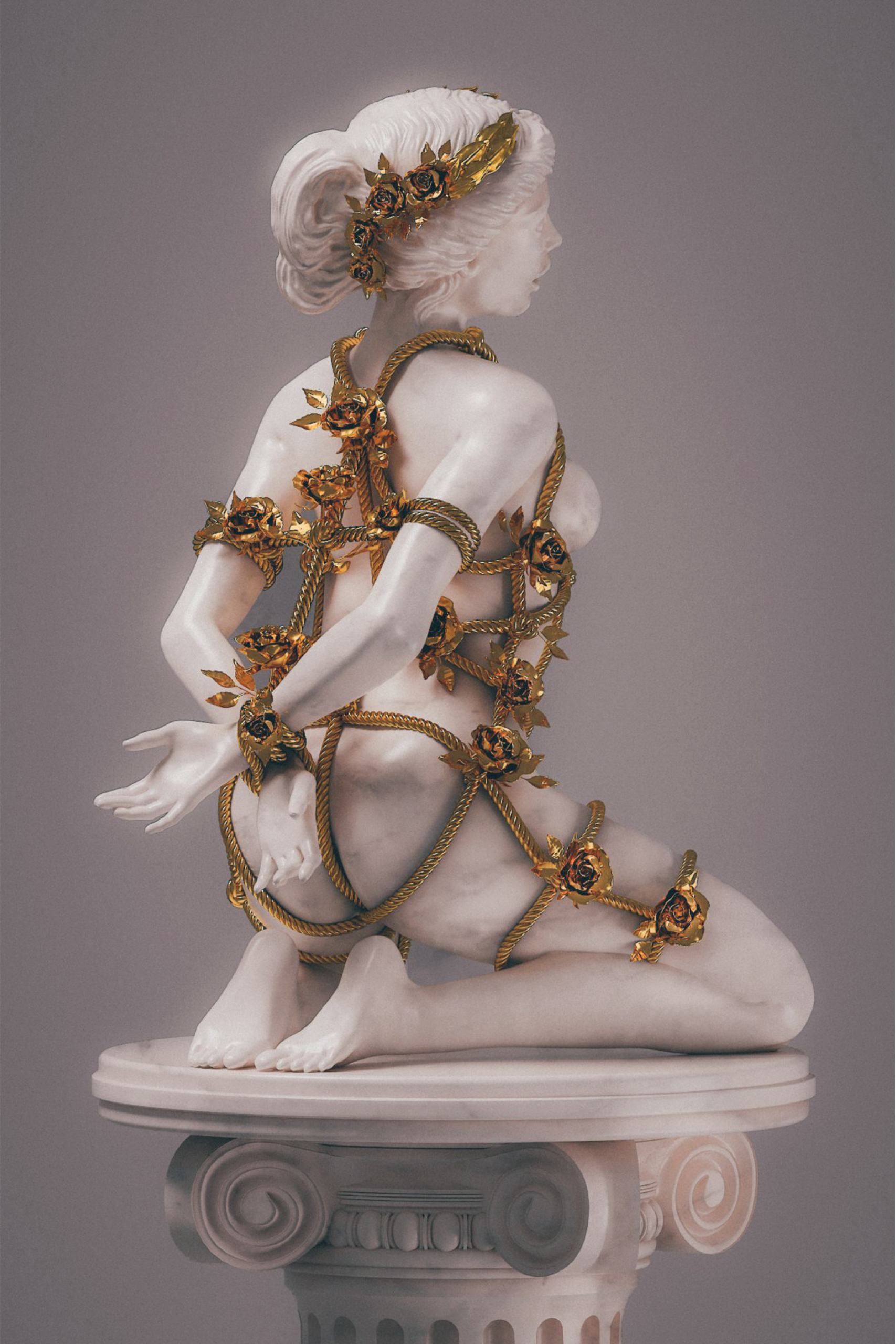
Those elements were already present in classical art—satyrs, abductions, and the many stories of desire and power in Greek mythology. Classical imagery is full of these dynamics. My work connects that legacy with shibari, a Japanese practice that evolved from a method of restraint into a contemporary art form.
Does turning erotic moments into stone change their meaning?
My work isn’t literally in stone—it’s mainly digital, and more recently sculptural, through 3D printing and physical objects. Translating these images into three dimensions doesn’t change their meaning; it changes the way I engage with them. The ideas stay the same, but the process becomes more physical and direct.
What do you want people to feel when they see your work for the first time?
I want them to enjoy looking. I’m deeply interested in the female body, and I place it only in poses that emphasize and respect its form, not in poses that suggest distortion or cruelty. The work is about tension and composition, not about violence.
Do you enjoy reactions of shock more than compliments?
I mostly receive positive reactions. When there is criticism, it usually comes from a misunderstanding of BDSM, which is based on consent and mutual pleasure rather than coercion. That difference is important to me.
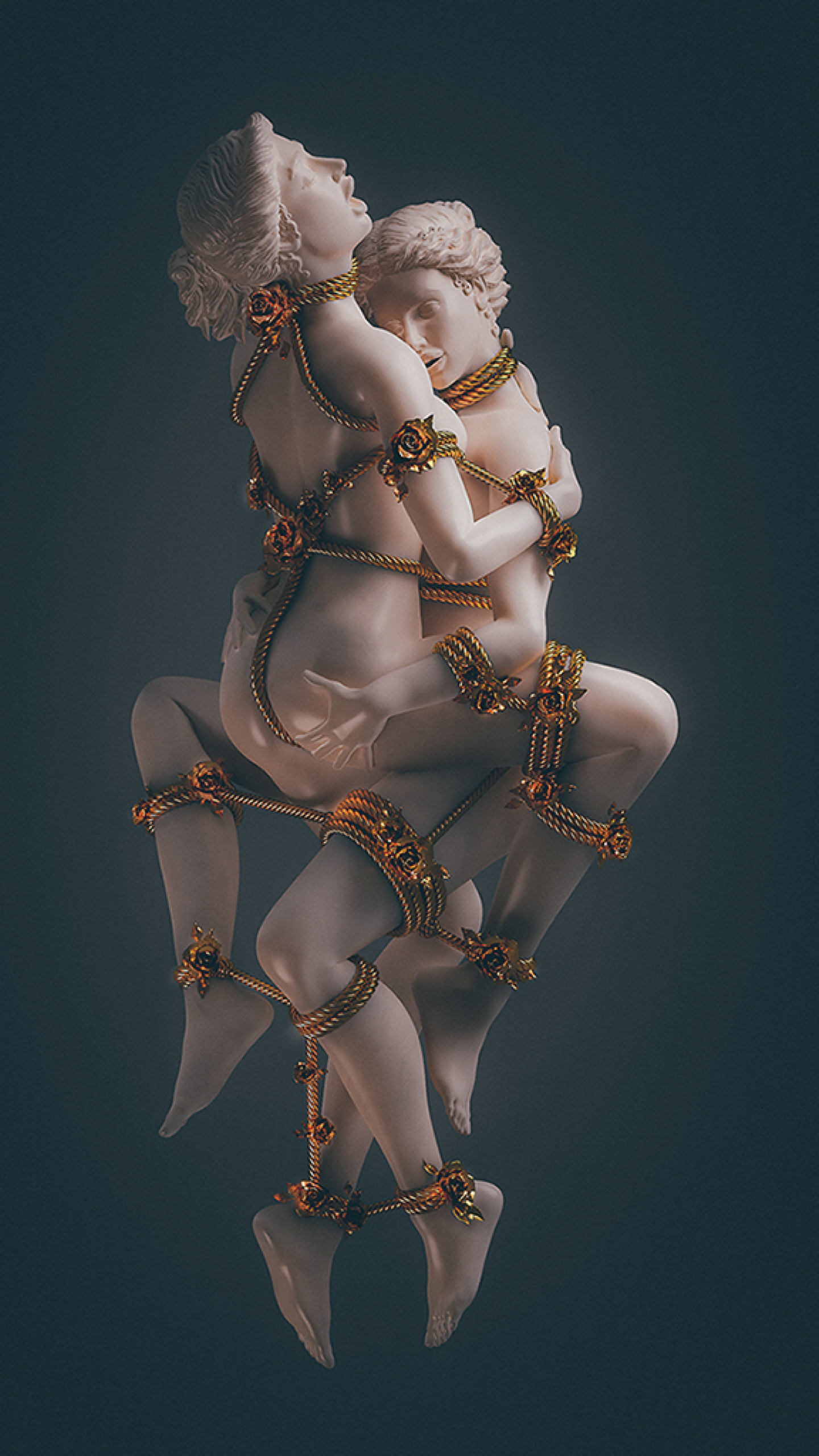
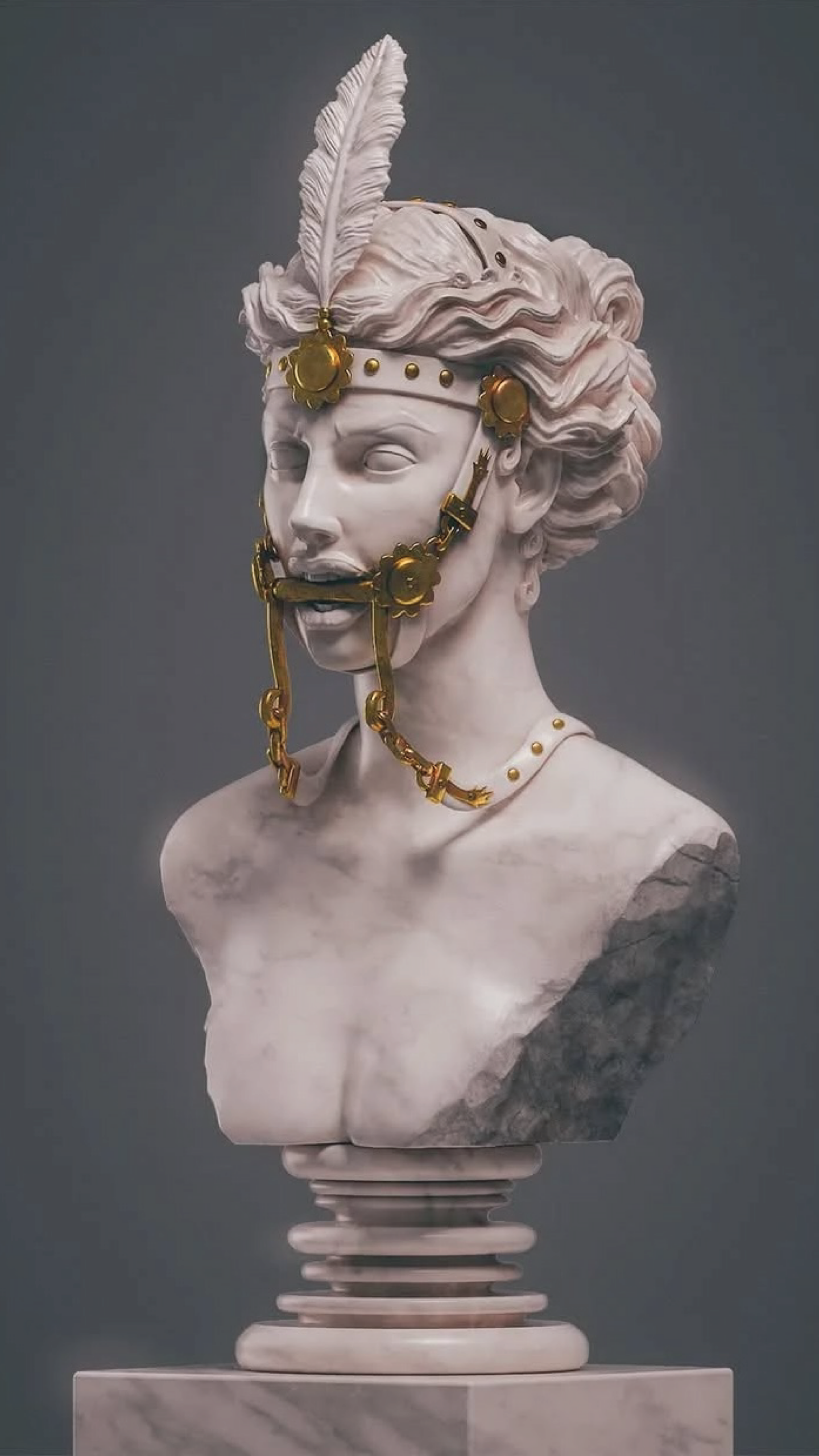
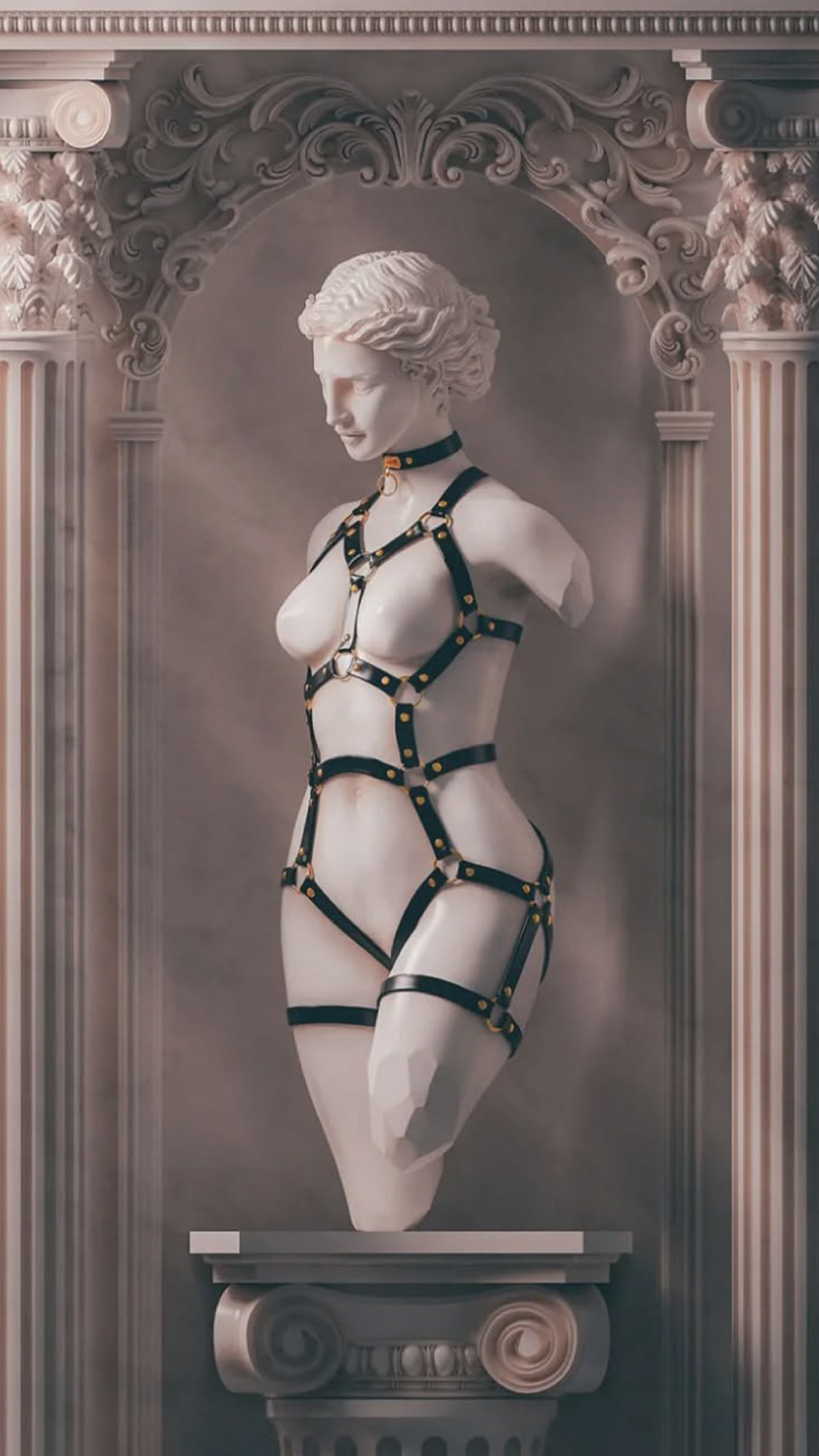
If ancient Romans could see your work today, who would be more offended-the senators or the sculptors?
It would depend entirely on the period. Someone like Caligula would probably appreciate it. Sculptors from the early Republic or the late decline might reject it—but those periods are not remembered for their strongest artistic production.
Was there a specific moment when your work shifted toward these themes, or did it happen gradually?
It happened gradually. At the beginning, I was working with Slavic mythology through a classical visual language, and this direction slowly grew out of that.
Looking back, what part of your past feels most present in your work today?
None of it, at least not consciously.
When did you realize this direction wasn’t just an experiment, but your language?
I don’t really think of it as my final language. I see it more as a phase—one period in a longer process. I expect my work to change direction again.
When you hear the word “decadent,” do you think of collapse, indulgence, freedom-or something else?
For me, decadence follows a historical pattern: first freedom, then indulgence, and finally collapse. You can see this cycle repeated across civilizations. Decadence isn’t an exception—it’s part of the process.
Do you see your work as decadent?
Yes, to a certain extent. I try not to make my work vulgar. But I don’t see it as more decadent than much of what is already celebrated in contemporary art. At some point, decadence stops being provocative and starts becoming empty—and that’s what I try to avoid.