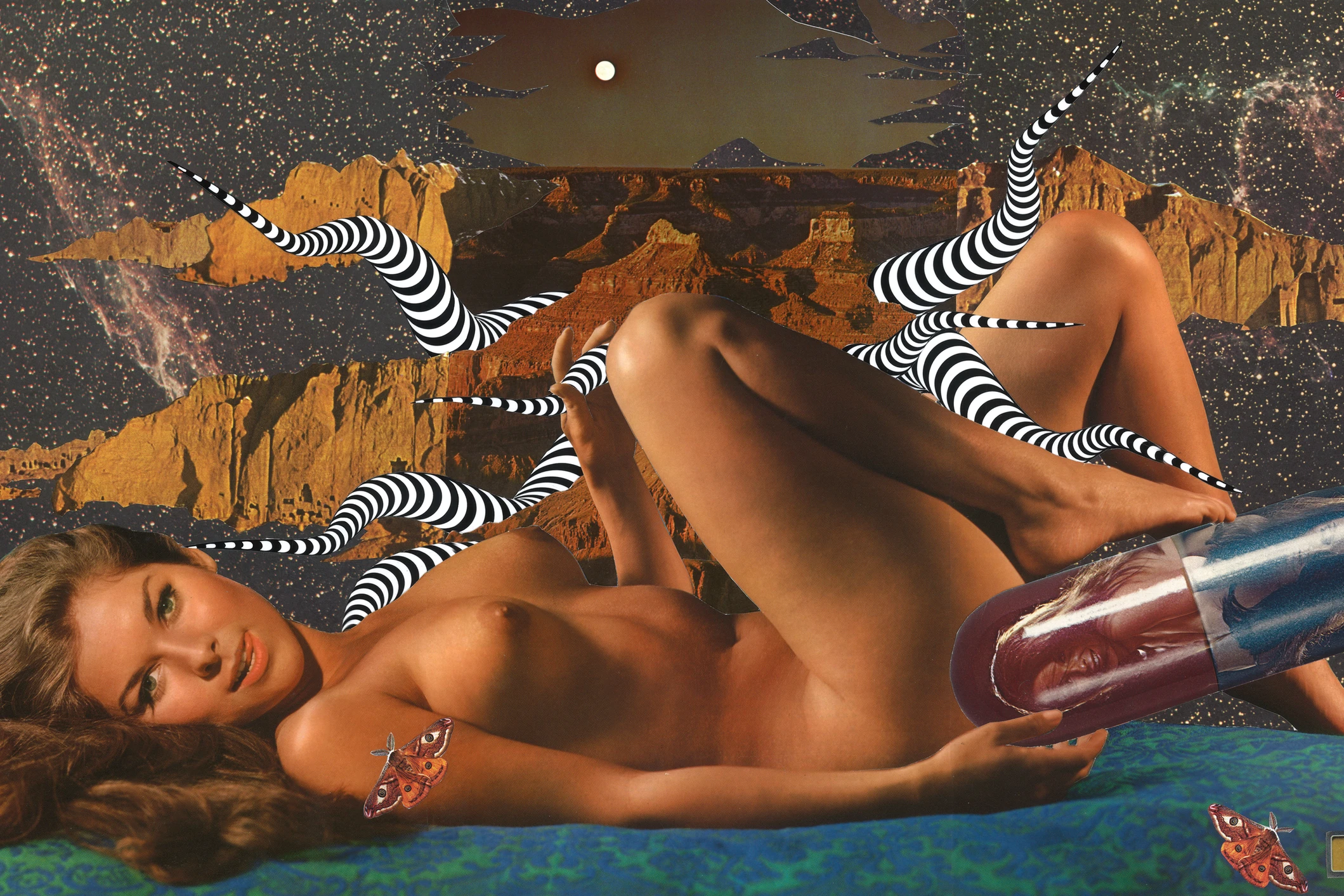
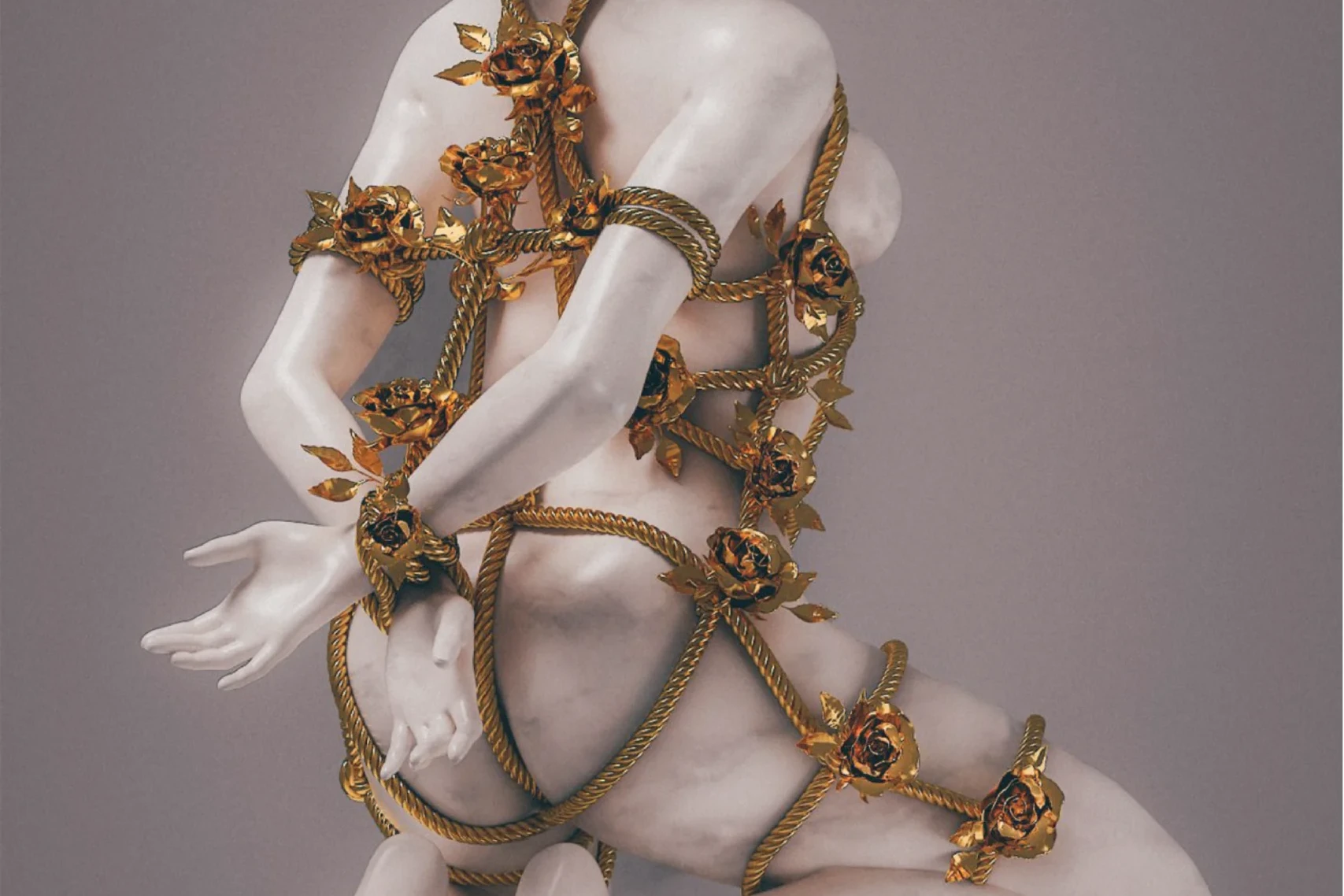
Today Decadent Magazine is delighted to chat with Graham Wood, artist, film maker, designer and iconoclast. From creating album and video art with Underworld to working with major global brands like Nike and Adidas, Graham is not just a Renaissance man, but a visual revolutionary. His work is featured in the the V&A and MOMA Permanent Collections.
DM: Hi Graham and welcome to Decadent. First of all, it’s great to meet you. Obviously, you’ve had a hugely successful career – I think people often start off as artists and go into making art for commercial purposes and then come back out at the other end – if you know what I mean?
GW: Well, I do know what you mean – but I left Tomato nearly 20 years ago and the point of Tomato was, we did art and commercial work side by side all the time anyway, and published them as books and performances and exhibitions and all sorts simultaneously. So I do know what you mean but there were always things going on in parallel.
DM: I’m sure the first thing that people normally ask you is about Tomato but I’m really interested in other stuff. So, a very basic question, where did you start? What made you naturally gravitate to art at an early age and then to the style that you started to develop?
GW: Well it was my dad really. He was an electrician in the Navy, and he’d had to go into the Merchant Navy because he was a naughty boy when he was a teenager. A very naughty boy in the 50s! And I sort of found his circuit diagrams in his notebooks. And they were fascinating. All done by hand in pencil and pen, basic training for being an electrician. And then he taught me to draw before I went to school. He taught me how to draw birds, which is that sort of two ticks thing, you know. And I was always fascinated by that because it sort of summed up the embodiment of the bird into two curves of a pen. And then I would copy Disney and Marvel characters from comic books. Lots of copying, but I’d end up getting told off at the school because the teachers thought I was tracing! I’d tell them I’m not tracing. I’m copying. They’re much bigger than the originals! They just wouldn’t believe me. It made me quite definitive and pushy about doing things. Because I was always being challenged, even when I was six, as to whether I was lying or not.
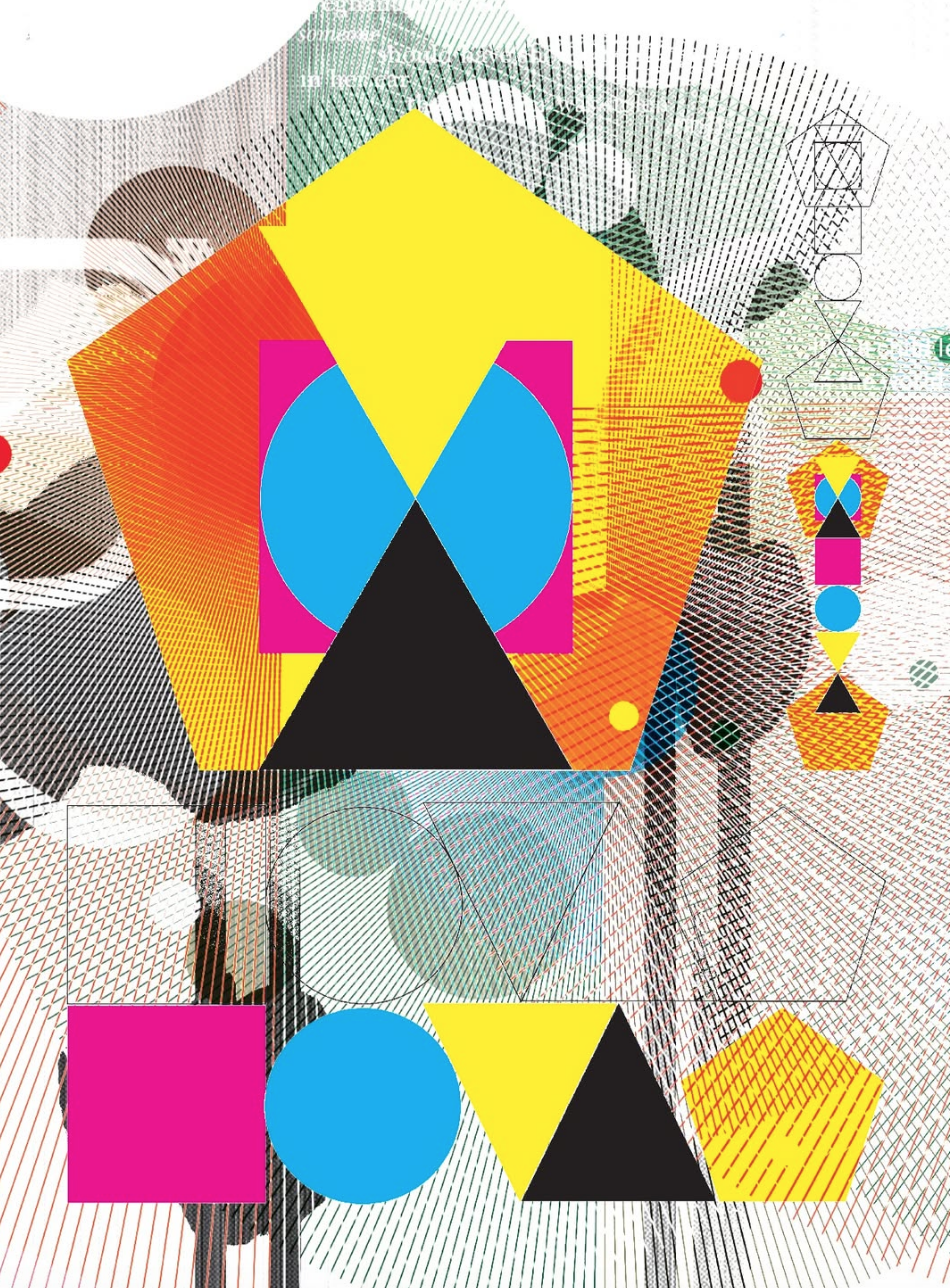
GW: Anyway, I found school very, very average.To the point where I ended up leaving with five average O levels and just about three A-levels, which then just about allowed me to get onto a foundation course. I got a C in graphics, D fine art and E for English, which was weird because I actually wanted to go and do English at university with a view to potentially becoming a journalist. As far as art, well I wasn’t the best in the class at all, but I loved doing it and I really enjoyed it. And unlike now, where art’s become a sort of after school activity, if you can afford to pay for it. Which is devastating, really. Then, you know, there was the art room with all the paint and brushes and stuff.
DM: It was like heaven compared to the rest of it!
GW: Yeah. So, you know, then I was doing art that got into sorcery and fantasy, very much sort of Frank Frazzeta and the heavy metal magazines of the 70s, then Ralph McQuarrie’s paintings for Star Wars and title sequences for TV programs like Doctor Who, The Persuaders and Department S and UFO. All all the Gerry Anderson ones. Randall and Hopkirk was a really formative title sequence. I was still quite average but at the Foundation course, I started to get into it more. I’d worked at a record shop locally and so got into album covers, the actual physicality of record sleeves, inner sleeves and then the different formats. There was a lot of stuff to be inspired by. Soon I discovered collage and doing things with geometric shapes. I got really into that. And then I went to do my degree – the first year was a little bit rocky – but fun. But the second year things really took off when I discovered the letterpress room and the other print areas. And I was lucky to be taught by a person called Phil Baines…
DM: Where was this?
GW: …Saint Martin’s. This was 87. Including the MA, I was there till 92. It was a good period to be there with lots of stuff going on, musically changing, clubbing and that kind of culture, which was fantastic. So, that was a fortunate position, you’re serving in the coffee bar at Saint Martins with Jarvis (Cocker), that kind of thing.
DM: Right.
GW: And you’re going to clubs, the last days of the Wag Club, that kind of stuff, and there were all sorts of new things, house and garage and techno things happening in all sorts of different places. It was a really good time.
DM: Did you do your own thing right out of college?
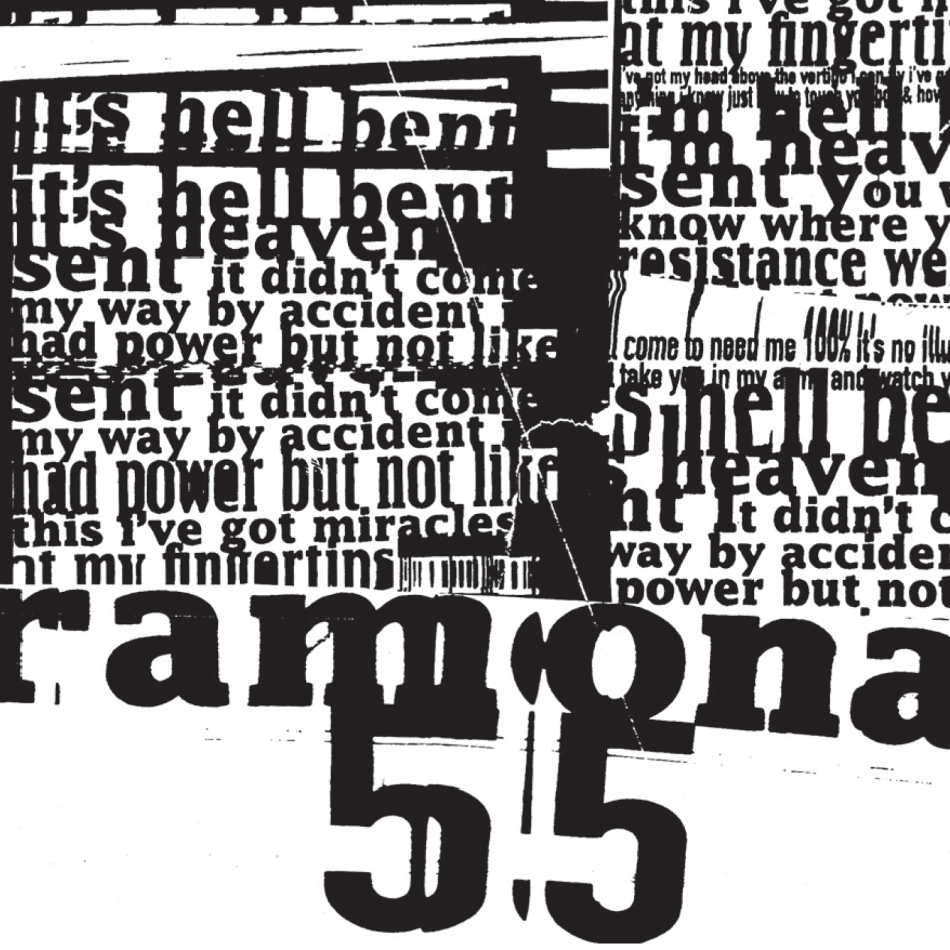
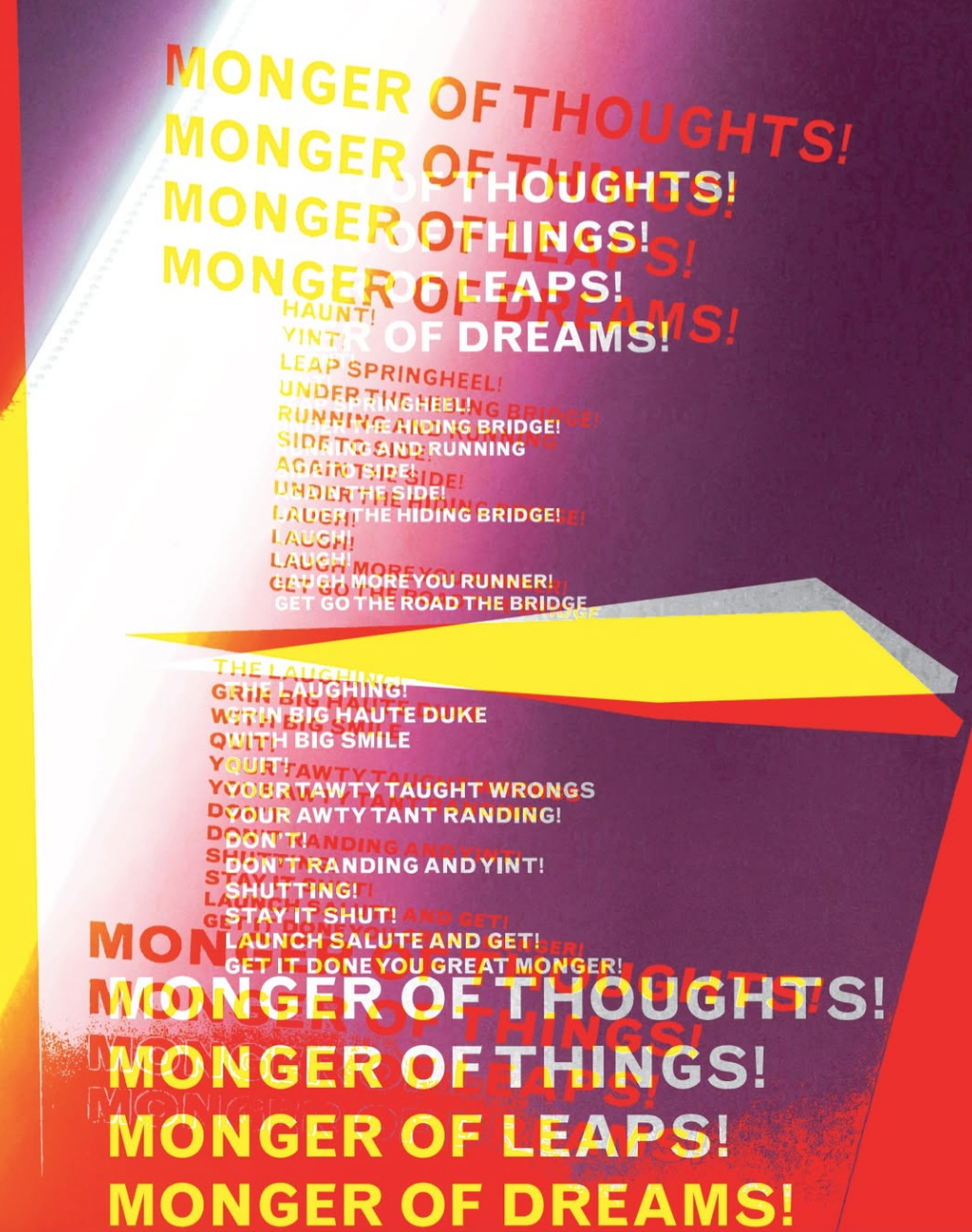
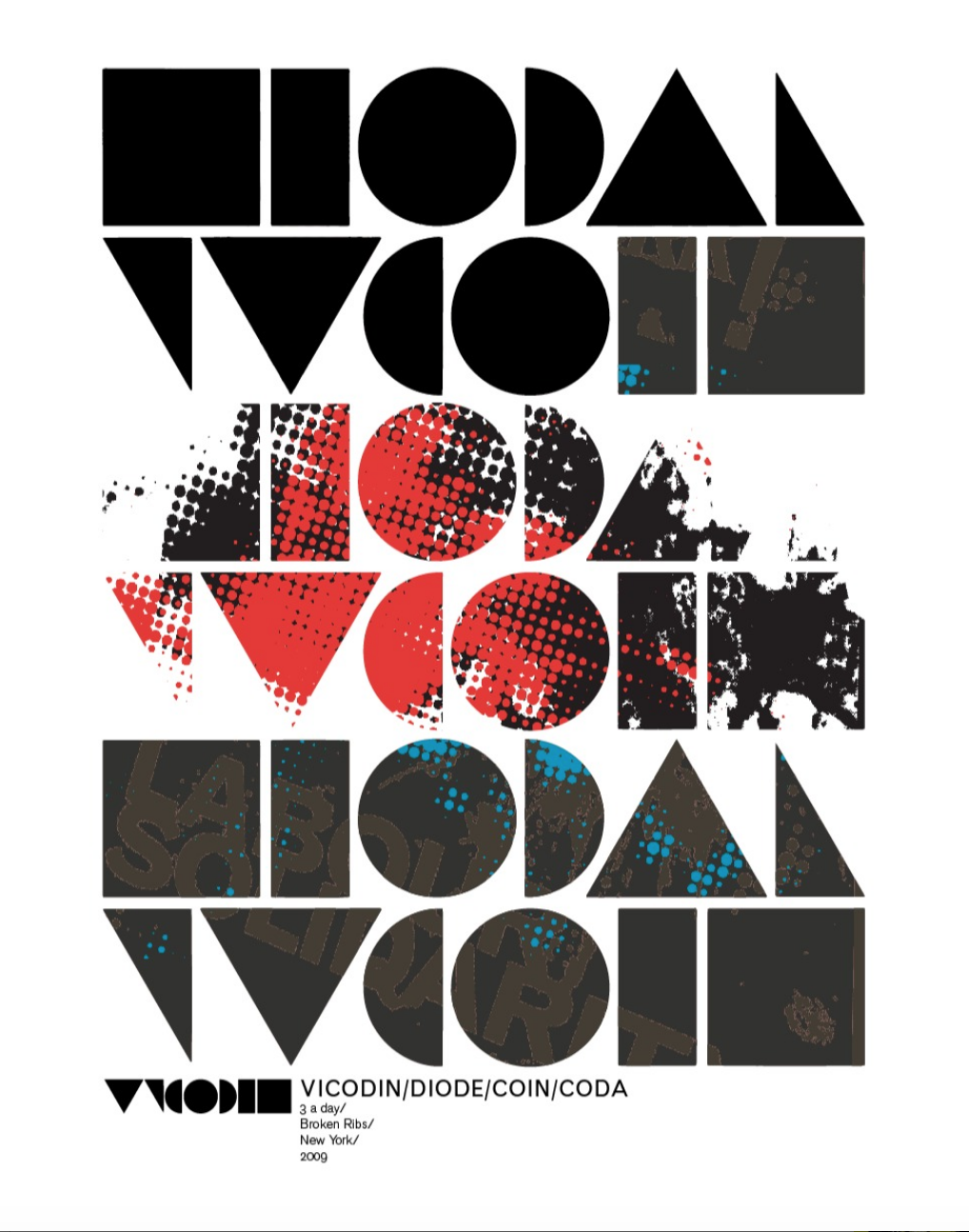
GW: Well, I did it at college. I mean, the thing is, Saint Martin’s was a really unusual place I think, because of the comparison to other places, in that it was really lacking in resources. It was really kind of thrown together. I mean, there were very good tutors there, but it was very loose and ad hoc. The first year was all about life drawing, etching, screen printing, litho printing, letter press…Also, there was a very small computer room with about half a dozen Macs in there so you could just about get to grips with that as well as being encouraged to make environmental things, cultural things, film, lithography, you could take it wherever you want. And we were given projects, but they were sort of galvanizers, sort of like things to get you going. When I discovered the letterpress room, and with Phil Baine’s help, he encouraged me – I was really into a particular band at the time and so I was using their lyrics to do all these letterpress prints. And then I started to write more. I was always writing anyway. So I started to use some of my own stuff in letterpress and I really kind of concentrated on that for most of the time. And it was a kind of repetition, constantly moving on very slightly. John Barnbrook was in the third year whilst I was in the first. He was great. He was a good friend at college, and he was a big influence because his stuff was amazing. And this hybrid of John’s kind of Gothic thing with Phil’s odd British Modernist thing was an odd collision in me. I spent most of my time pretty much copying those two. So then sometime in the third year, one of the tutors said to me, “I’m going to have to set you an identity project just so you’ve done one.” So I did that and I was like, okay, fine, tick. But, my thesis was about symbolist poetry, and Mallarmé, Apollinare, and people who use concrete poetry, who use words as poetry – like text moving on the page so to speak. Along with composers who composed in sort of avant-garde innovative ways. There was a book, a compilation of John Cage’s favorite scores. And all of these scores were like kind of geometric shapes or they were scribbles or whatever, or they were circles upon circles. So there were all these kinds of 20th century musical scores that were used by musicians, but they weren’t on staves and they didn’t have like a meter and sort of that kind of stuff. And that was really fascinating.
DM: Kind of like your father’s electrical diagrams…
GW: Yeah. And then on the MA, I did this really odd thing about Alchemy and Scott Walker and Werner Herzog and God knows what – I’m amazed I got away with that. So whilst I was on the MA, Tomato formed whilst I was in college, so it was a kind of crossover thing.
DM: You naturally just fell into it, right?
GW: Yeah, well, kind of. In the summer between my BA and MA I’d met this guy, John Warwicker and he’d given us a talk and I’d said to him – being a student – what you’re saying is amazing, but your work is crap. So how does that kind of come together? And he said, well, come and see me, and we can talk a little more. And he was very nice to me and gave me summer work – record sleeves and stuff. And kept giving me work through the MA when I could fit it in. The company he was working for in Camden Town was called Vivid. They did graphics and film, like music videos and features, and he kept giving me work – well that went under. There were various satellites, people around John, and that became Tomato.
DM: So was anyone from Underworld at Saint Martin’s as well?
GW: No. Underworld were a band in the early 80s called Freur, who were sort of the next big thing and they had a semi top 20 hit that has since become a sort of a bit of a retro thing, obviously because of Underworld. And it’s quite good, it’s called Doot Doot. And it’s got quite a good chorus and a good build. Anyway, they were in an early kind of Duran Duran thing. And John was friends with Rick and Karl when they were at college. They became Underworld in the 80s, but it was kind of pop rock and a very different thing and they did two albums, I think. And they were aiming to be a stadium band and did support tours for big bands and stuff. But it didn’t really work out. And I met them at Vivid through John, when I was working that summer, and they were trying to work out what to do next. They were probably in their early 30s and they’d met this 17 or 18 year old DJ Darren then and they started to do some bits and pieces with him and blah, blah, blah, we sort of became friends. I started doing scores, like shaped graphic shapes and geometric shapes and really long things that I ran through fax machines and blueprint machines. And we’d kind of exchange; they’d do a track and give me that and I’d do my thing and give them that. And all the others would contribute as well. And that kind of interplay early on was really nice. And it was really a sort of indication of the relationship between music and visuals.
DM: I don’t think anyone’s done it quite so instinctively as I’ve seen Underworld do it with your work. Do you think they were symbiotic? Do you think one couldn’t have existed without the other?
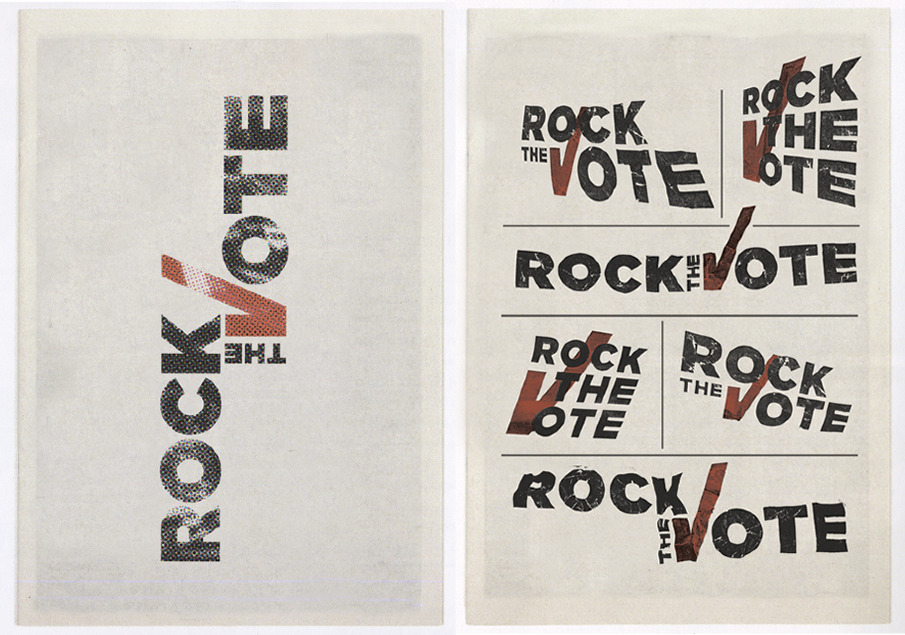
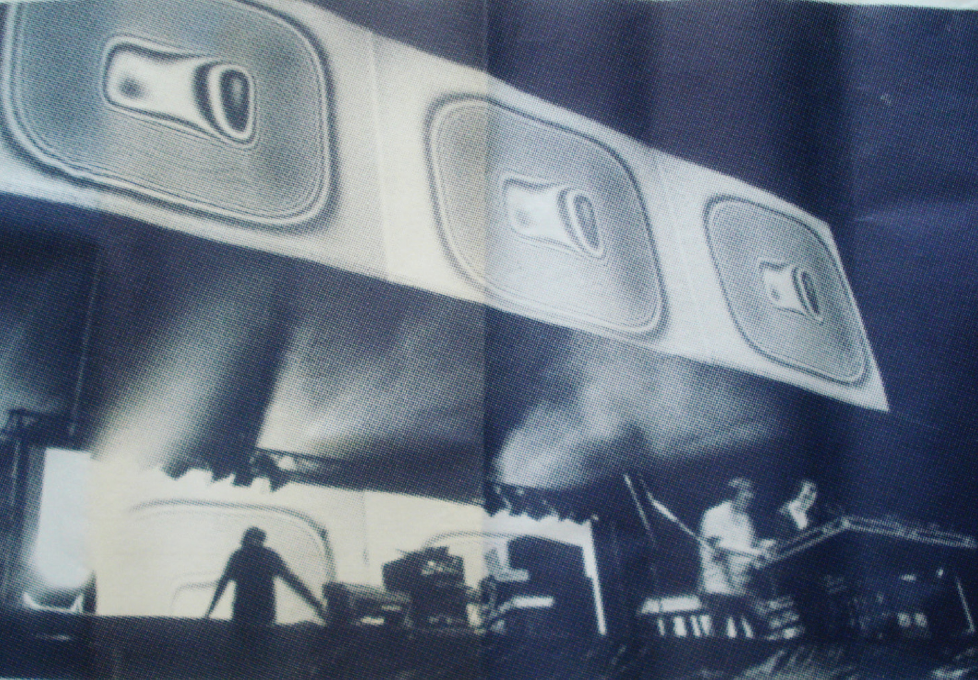
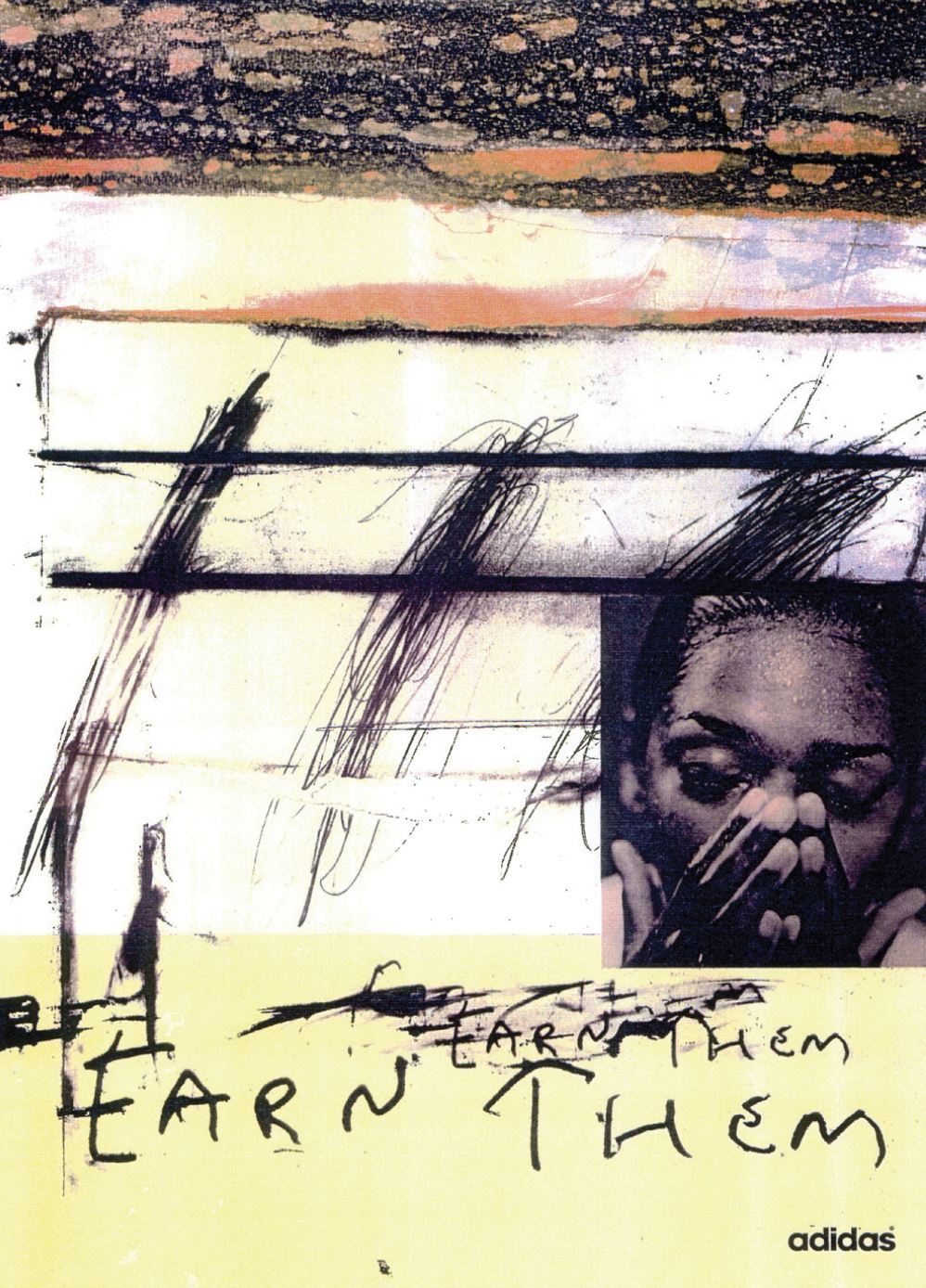
GW: That’s interesting, and I think it is actually a broader subject. But I do tend to find that with those kinds of relationships. Let’s rewind a little bit. At the time I met Underworld and I started to hear the very early stuff, well I really hated House and that kind of stuff. I mean, the odd thing, you know, but I was much more psychedelic funk and jazz, and I was a bit of a Goth too. So I really wasn’t that keen on what they were doing. So in a way, I wasn’t so close to it, but I was desperate to do that. They were the best option because they were there. So it was quite nice because I didn’t feel beholden to approach it in any particularly “appropriate” ways to whatever they were doing. And I think that if I’d been doing a similar thing with a band I’d really loved, I probably would have screwed up because I would have been too respectful to whatever their thing was and I would have been maybe too careful and too in awe. So it made it a lot easier to churn stuff out, to just kind of play with it. And I think it’s a useful thing when it comes to making your own work. Not to be too close to it. I’m not saying this as advice or as a kind of rule, but it just feels to me like a good way of being usefully prolific as well as productive at the same time.
DM: I know they predated you massively but it reminds me of a little bit of the story of Hipgnosis, you know, how they would just do their thing. It’s like when Led Zeppelin came out with Presence, theband had been using a lot of retro imagery, you know, and then suddenly these designers come out with this sleeve, which was like, what the fuck is that? And everybody who was a Zeppelin fan was like, what the fuck is this? You felt like there was a freshness to this album because of the graphics.
GW: Yeah, with the first couple Underworld albums, our approach was as much to do with like, okay, at the moment, most house techno is acid colors, smiley faces, fractals, whatever – psychedelic stuff. So what’s the opposite? Hand-done stuff, black and white, kind of collage. So it was about doing the opposite of what was going on in the mainstream. It was to do what we really wanted to do with it, you know? As time went on Jason Kedgley, and Dirk van Dooren did the sleeves. I was only involved in the first couple of album covers. I was doing most of the moving image videos and live graphics and live show projections.
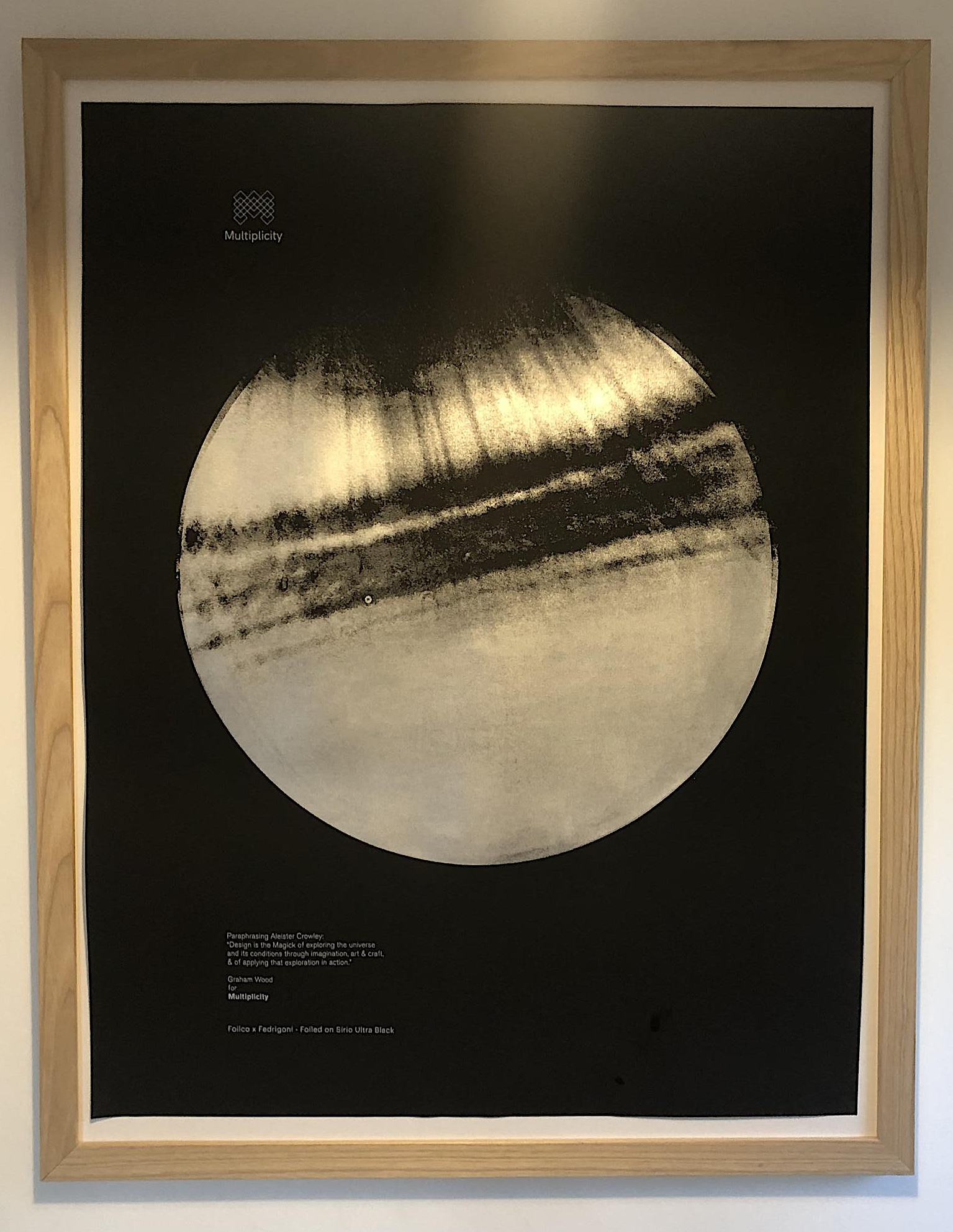
DM: So is there any work that you’ve done that you’ve never shown anyone?
GW: No, not really. I’ve always tried to get it out. But if anyone is interested enough to have a look through, for example, my Instagram thing, there’s all sorts of things. I mean, I’ve always been a big believer in if you don’t at least show it, what’s the point?
DM: Yeah, it’s the ‘if tree falls in the forest’ analogy, isn’t it?
GW: Yeah, I mean there’s an audience of sometimes 20 people or there for some other stuff and that’s all right, that’s fine. There were a couple of things that were sort of either rejected or never finished, that ended up being finished and then went out. There’s a video we did for Nine Inch Nails a long time ago, in ‘99, that was rejected and then ended up as a sort of extra on a DVD about 10 years later.
DM: …Which leads me to my next question! Is there any work that you’ve done that you come back to maybe years later?
GW: Yes, the band that I was really into at college and did most of my stuff from their lyrics was called Dead Can Dance. I was absolutely mad about them when I was in college, and before. And through college I got to know Vaughn Oliver who did all of the Cocteau Twins and Pixie’s stuff. And although they were on 4AD at that time, he never did any of their covers. One day in my second or third year when I rang him as I was angling to get a free advance copy of their next album. I told him I wanted to do some work with them and he said “oh, Brendan’s here, you can ask him yourself.” And I said, “fuck, he’s there?” And he goes,” yeah, let me put you through.” And then this voice came on the phone and said, “oh, Vaughn’s put you through. What are you after?” And I told him and he said, ”oh, I’ll meet up with you. Do you want to meet up with the Coach And Horses in Soho?” So I got to know them. I’ve done a couple of album things for them: when they split up they did a big retrospective thing for them and a couple of compilation things. And one of Brendan’s solo albums. And back in 2000, he wanted me to do a video. And I was like, okay, cool, I’ll do that. Fantastic. And I got this friend of a friend, a Japanese guy who was an archer and kind of could do the whole thing. And we found a disused church with light streaming in and had him go through this long ritual of loosing one arrow, he could do this whole thing in meticulous order and then I added things like an owl and a Japanese demon mask. And Brendan said, “why don’t you just make this as long as it wants to be and I’ll compose a new piece of music, which we’ll release with the album. It’s not going to be a single, so it doesn’t matter.” And I said, “oh, cool, brilliant. That was 2000. Well two years passed, and he still hadn’t done the tune by which time I’d moved to Stockholm. To cut a long story short, he finally did the tune for it two years ago. I was panicking because all I had was a three gig file, and it was crunchy Super 16. Well fortunately, AI saved me because John, the editor that I’d worked with forever, he went, oh I can make that look like 70mm if you want. I was blown away. It was like magic. It felt like film. So yeah, the record is 22 years…
DM: That’s a good answer! So an off beat question, what part of your creative process is invisible to outsiders, but visible to you?
GW: Yeah, that’s a really good question. It’s all the bits that no-one ever asks you about interestinglyI So, for example, I did a whole bunch of things for a client a while ago, which were projections for big shows. And they gave me pretty much free reign, and it was a big deal, a big thing. And they didn’t really have a brief, you know, they just wanted to make the things look good, (I’m being a bit cagey about who it’s for). So I had to build my own narratives and one was a journey through the molecular structures of LSD, ecstasy, cocaine, heroin. So all the molecular structures we made in 3D and this sort of flowing molten pathway. But no one ever knew that. They were like, well, those are really interesting geometric shapes. No one ever asked what they were!
There was another one that was a sort of journey through a really weird, almost Lovecraftian space thing. And again, with lots of influences from Lovecraft, there was an image of Cthulhu in there and stuff like that. And again, this big corporate client. They thought it really was just beautiful. So a lot of that stuff. More practically speaking, the bit that’s invisible is the thinking, you know, kind of sitting there, wondering, oh, should I have a look through some alchemical symbols and see what’s there? Or will I read some sort of brand new poetry by some weird person from Madagascar or something? Or what does this Koto sound like if you’re broadcasting through a phone? And what would that do then visually?
DM: I was thinking about creativity today. And, you know, not to harp back on Tomato, but you came from an environment like St Martin’s where collaboration and that kind of selfless giving was very much a part of just the spirit of the place. Everybody now seems so obsessed with this kind of immediate social self-aggrandisement – it’s all look at me! Look at me! Do you think that we’re in a place now where people aren’t able to be like that anymore? Do you think that is gone? Or do you think there are still pockets of creative collaboration out there?
GW: I don’t think it’s gone because there are pockets of people doing things that are brilliantly mad. I really like the ‘Brat’ album cover and there’s a guy called Barrington Reeves, he has a Scottish agency called Too Gallus they’re on the way to doing interesting stuff. The Neasden Control Centre is doing great stuff. There’s a whole bunch of people. I mean, there’s actually a lot. But… There’s two ends of the scale for me – the “industry” is extraordinarily bland. I mean, I don’t understand. Funnily enough it reminds me of when I started in that there was a really bland bunch of things going on. And then there was a brilliant sort of clearing of the field where people started doing interesting stuff, in a way, if that makes sense.
DM: Where they rose above?
GW: Well, or just rose very far below! Which is good too. It feels like now. It feels like the ground is set as bright colors, bobbly things, brand new typefaces, and slightly quirky things. That seems to be what everyone’s doing and everyone is aspiring to because they seem to be more worried about the stuff that appeases the capitalist people behind the scenes. So the strategy of dealing with clients is more important than the end result. And you hear that quite a lot – it’s not about the end result or the visual thing or the kind of tangibility of things, it’s about other stuff. But if a writer said that or a painter or a chef or a director, you’d end up with nothing, you’d be lost. If it happens to be a weird commercial arts thing in terms of visual design, visual communication, that it sort of deprecates itself to the point of removal.
So to that point, the other end of the scale, college education or university, whatever they call it now, for the most part, they’re a trap, I think. I mean, obviously there’s the practicality. It’s a huge expense. It’s exclusive, exclusionary. It’s a really hard thing to navigate as anything except a pathway towards work. For me and the generation around me, a job was important, of course, but you could pick up freelance and have enough money to live on. And it was enough to pay the rent and go out a few nights a week and stuff. But that’s impossible now. It’s too expensive so it’s hard. It’s really, really hard. I think design education has reacted in a way to make it worse.
DM: I think that everyone comes out of art college with all the right tools. But I don’t think that anyone really teaches people how to think anymore. Do you know what I mean?
GW: Well, I think you’re right. It seems to me that there’s lots of great claims for finding ways to bring people who are not well off into this world – which was the assumption when we were around. Everyone was going to college. But now that’s just not the case. And, you know, there are lots of good intentions and lots of good words coming out. But for some reason, it’s getting muffled somehow. And I can’t quite put my finger on it as to why. I think it’s because some people running courses are convinced of their absolute rectitude in terms of the ethos. And are locked into what is now and in the future, which is brilliant. But the thinking is not there.
DM: Have you ever put yourself forward to teach?
GW: No, I tried. I heard a story that might be apocryphal, about someone who’d applied for a creative job and got a rejection in five minutes. And they wouldn’t let it go and decided to dig into it. And they discovered through a few weeks of digging and finding people who knew people within the company that the algorithm was just rejecting creatives immediately because it had no way of processing information about creativity. So they just said, you know, well, they’re never going to fit in. And they were trying to get creatives in for creative jobs! It sort of struck me because I’ve applied for things. I would adore teaching. It’s kind of what I’ve wanted to do for quite a while.
DM: You should think about doing your own thing…
GW: Yeah, that’s on the cards. I’m probably going to give that a go. I’ve been speaking to quite a few newish agencies and people in their late 20s and early 30s about things.
DM: That leads me to my second to last question. We talked a little bit earlier about how everything seems quite bland and nothing seems to be rising above. And, even though there was a lot of subculture happening in the ’50s and ’60s, it wasn’t until there were some real conflicts that creative rebellion started to really happen. Yet with so much to push against right now, where is our rebellion? Where is the creativity? Where are the anthems? Sure there are people taking to the streets with banners saying clever things against Trump, but where’s the art movement of protest? Do you know what I mean?
GW: I do know what you mean. And it’s a very interesting question. I don’t know, It’s a lot more underground than it ever was before, I guess. And I don’t know how far into the mainstream it will ever go because it sort of doesn’t really need to, I suppose. This sort of chimes a little bit with the last thing we talked about, I’ve spoken to some of the bigger online music platforms about doing stuff. And the music is the last thing. The absolute last thing. And the kind of visual stuff is home screens for Netflix, Amazon, Hulu, whatever. They go, “oh no, we’re the heads of design for X or Y or whatever. And they all go, oh, here’s our work. And it all looks like navigating Netflix. Yeah. Well, but where’s the stuff?
It’s interesting because I’ve been talking to a guy recently about online music platforms and about how music and visuals are potentially of equal importance and how you could potentially do something that might bring that to life, whether that’s to do with pure aesthetic joy, whether it’s protest, whether it’s aggressive, whatever, and I think that could be an interesting thing. But in terms of the thing you’re talking about, it’s around. I think it’s become memes and things. There’s that sort of meme of Vance as a kind of weird looking character and there’ve been people who’ve been sent back from coming into America because they got it on their phone. So that seems fairly disruptive to me. There’s a group called Led by Donkeys over here who through the Brexit thing and Farage are doing a lot of fly posting projections, street stuff. So there’s stuff around. It doesn’t feel like there’s a kind of drive towards it as much as there could be. But many things have become so serious now that there’s no room for that. You need to really be much more kind of on it and deal with things as far as you can face to face…
DW: I kind of think that social media gives everybody the ability to be really upset about something and then be hit with a meme of a kitten. It’s like a kind of mollifying, It stops people from being really angry.
GW: Yeah, it can. I can also do the opposite.
DW: Yeah, true.
GW: I think it’s a weird thing because it’s given everyone a platform. That’s the thing. That was the dream. What do they call it? The ‘dream means of expression.’ It’s all out there. Anyone can get anything out. But it’s like the analogy in the Scott Walker line; “in a world full of friends, you lose your way.” You know, if you have everything possible to hand, where do you begin? It’s a bit like what you were saying earlier, you know, if things are so completely planned, where does it even start again? It’s slightly hopeless. But I do find a lot of inspiration in really good podcasters and YouTubers. There’s a bunch of them out there. Whether they’re dealing with important issues, or a two hours explosive expose of NFTs, you know?
DW: So last question, what’s next?
GW: So we have this thing called Department Of Somethings. It’s the thing I have with Rosie, my partner. She’s just finished her MA in Communicating Complexity in Visual Design. She’s really into social communal work and discovering things and I’ve been doing art and we sort of put those things together and have started to work together. We’ve done some exhibitions and most of the work is on the website.
DW: That’s great. I can’t wait to see where that leads. Well, we’re at our allotted time. Just remains for me to say thank you Graham for being so candid; this has been superb.
GW: Thank you.
LINKS
Instagram here
Writing: https://grahamwood7.medium.com/
Archive: http://cargocollective.com/grahamwoodwork
Recent: https://grahamwood.cargo.site/